Your Cart is Empty

Whole house water softener systems for well water and city water, built on Clack, Fleck and Autotrol Logix control valves in 32,000 to 64,000+ grain sizes — single tank, twin tank, softener + carbon combos, and salt-free conditioners. Every system ships free with no sales tax outside Minnesota, and we size it to your water test at no charge. Shop by need: well water · city water · iron · softener + filter combos · commercial · salt-free. Not sure what size or which valve? The sizing guide and Clack / Fleck / Logix comparison are below the products.
A water softener removes calcium and magnesium — the minerals that make water "hard" — by ion exchange: hard water passes through a bed of resin beads that swap the hardness minerals for sodium, and every few days the valve regenerates the bed with brine from the salt tank and rinses the hardness down the drain. Every salt-based softener on this page works that way. What separates one from another is capacity (how many grains of hardness the resin holds between regenerations), the control valve that runs the cycle, and whether the system is built for well water or city water. Get those three right and the softener will run quietly for 15–20 years.
Start with a water test. You need hardness in grains per gallon (gpg — divide ppm or mg/L by 17.1), iron in ppm, and for wells, manganese and pH. City water customers can usually get hardness from the utility's annual water quality report. Send us the numbers and we'll size the system for free, or use the table below.
Softener capacity is rated in grains: 1 cubic foot of resin holds a nominal 32,000 grains, 1.5 cu ft is 48,000 and 2 cu ft is 64,000. The number you're sizing for is grains of hardness removed per day × days between regenerations. Daily grains = people in the home × about 75 gallons per person × compensated hardness (your hardness in gpg plus 4 grains for every 1 ppm of iron). Multiply by 7 for a weekly regeneration, and pick a softener whose salt-efficient capacity (about two-thirds of the nominal rating — regenerating at full capacity wastes salt) covers that number. A metered valve then regenerates only when the gallons are actually used, so a slightly oversized system costs nothing in salt and gives you longer resin life and better flow.
| Household | Hardness up to 10 gpg | Hardness 10–20 gpg | Hardness 20–30 gpg or iron present |
|---|---|---|---|
| 1–2 people | 32,000 grain (1 cu ft) | 32,000 grain | 48,000 grain (1.5 cu ft) |
| 3–4 people | 32,000 grain | 48,000 grain | 64,000 grain (2 cu ft) |
| 5–6 people | 48,000 grain | 64,000 grain | 64,000 grain or twin tank |
| 7+ people, large tub, or 1¼" plumbing | 64,000 grain | 64,000–80,000 grain or twin tank | Twin tank or commercial softener |
Two sizing mistakes to avoid: buying a small "high-efficiency" cabinet unit for a large family (it regenerates every night and the resin wears out early), and forgetting flow rate — a 3-bath home with a soaking tub needs a 1" valve and a 1.5 cu ft or larger tank so the softener doesn't become the bottleneck at peak demand. Every system on this page is sized by tank in the product options; the combo systems and commercial softeners go larger.
Well water nearly always carries some iron, and often manganese and sediment. A softener will remove clear-water (ferrous) iron up to about 5 ppm along with the hardness if it's set up for it — fine-mesh or 10% crosslink resin, a resin-cleaning salt or periodic cleaner, and the iron counted in the capacity calculation (that's the "+4 grains per ppm" above). Above 5 ppm, or with red-water iron, iron bacteria or sulfur odor, put an iron filter ahead of the softener so the resin isn't fouled. Wells also need a sediment pre-filter and a check on pH; acidic water (below 6.8) should be neutralized before the softener. Our well water softener systems and softeners for iron removal are configured this way.
City water is chlorinated, and chlorine slowly oxidizes softener resin — standard 8% crosslink resin lasts roughly 10 years on city water, while 10% crosslink resin lasts noticeably longer, and a carbon filter ahead of the softener (or a softener + carbon combo) removes the chlorine and the taste along with it. Hardness on municipal water tends to be steadier and lower than on wells, so city systems are sized more tightly. See city water softeners.
The valve is the only moving part on a softener and the part you'll live with for 20 years, so it matters more than the brand name on the tank. We build on the three valves with the widest parts and service availability in the US. All three are metered (demand-initiated) valves with a programmable digital controller, bypass and a 5-year valve warranty; the differences are in port size, flow and features.
| Clack WS1 | Fleck 5600 SXT / 5800 SXT | Autotrol Logix 255/760 | |
|---|---|---|---|
| Plumbing connection | 1" valve with ¾" to 1½" fittings; WS1.25 / WS1.5 / WS2 for larger lines | ¾" or 1" yoke on the 5600; 1" on the 5800; 2510 for higher flow | ¾" bypass and copper adapters included |
| Service flow (typ.) | Up to 27 GPM | Up to 20 GPM (5600); 21 GPM (5800) | Residential flows on ¾"–1" plumbing |
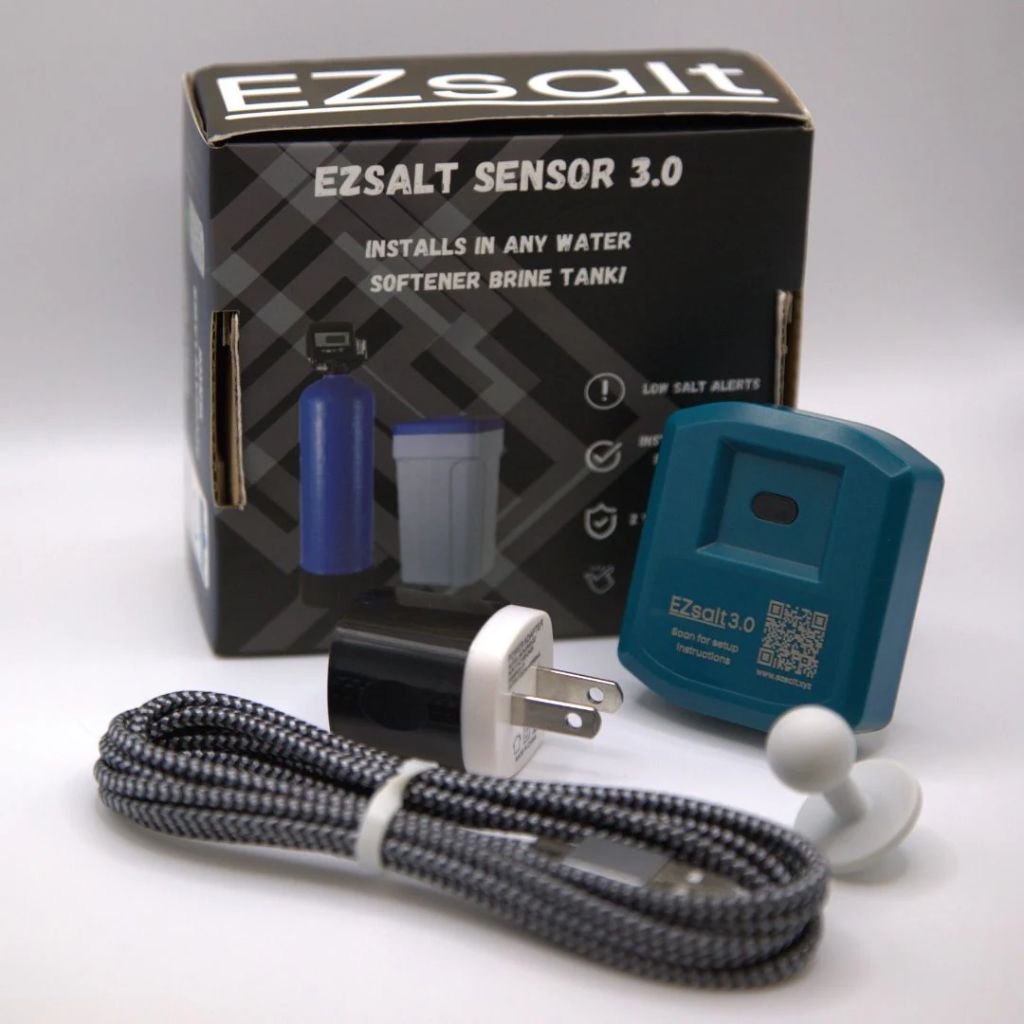
| Controller | Backlit digital, metered, adjustable cycles; EZsalt salt-level smartphone sensor included; Bluetooth app control on the Connected Series | SXT digital metered controller, the most-installed softener control in North America | 760 metered controller, simple 4-button programming |
| Design notes | Single piston, front-access electronics, quick-connect bypass; parts are common and inexpensive | Proven piston-and-seal design since the 1970s; parts everywhere; 9100 SXT twin version | Flapper-valve design with fewer wear parts; widely used by OEMs; ships with 10% crosslink fine-mesh resin; economical |
| Shop | Clack water softeners | Fleck water softeners | Logix water softeners |
Any of the three will soften your water. Choose by plumbing size and peak flow first, then by the features you'll use — salt-level alerts, app control, or the lowest cost of ownership.
A single-tank softener regenerates on a schedule (usually at 2 a.m.) and bypasses hard water to the house during the 90-minute cycle — invisible to most families. A twin tank (twin alternating) softener has two resin tanks and switches between them, so one is always in service: soft water 24 hours a day, regeneration with already-softened water (which keeps the resin cleaner), and capacity sized to actual use rather than a calendar. Twins make sense for large households, homes with high or irregular demand, very hard water, and any commercial application. We offer the Clack Twin Tank, the Fleck 9100 SXT and the NWS Twin Tank.
Only a salt-based ion-exchange softener actually removes hardness; it is the only technology that gives you soft water — no spotting, no scale, less soap, softer laundry. Salt-free conditioners (TAC media such as our salt-free systems, or citric-acid NuvoH2O cartridges) leave the minerals in the water but change them so they don't stick as scale. They need no salt, drain or electricity and are the right call where sodium is restricted or a drain isn't available, but the water will still test hard. If you want soft water, buy a softener; if you only want to protect the water heater and plumbing from scale, a conditioner will do it.
How much salt does a water softener use? A properly sized metered softener uses roughly one 40-lb bag a month for a family of four on moderately hard water — 6–10 lb of salt per cubic foot of resin per regeneration, regenerating every 7–10 days. Oversized or timer-based units use more.
Do I need a drain and an outlet? Yes for a salt-based softener: a standard 120 V outlet for the controller and a drain line (floor drain, standpipe or utility sink) for the regeneration water, up to about 20 feet away and no more than 8 feet above the valve. Salt-free conditioners need neither.
How long does the resin last? 10–15 years on well water with iron kept in check, and 10–20 years on city water depending on chlorine and whether you chose 10% crosslink resin. When capacity drops and salt use rises, the resin is rebedded — the tank and valve are kept.
Can I install it myself? Most homeowners do. The systems arrive with the valve on the tank, a bypass and a brine tank; you connect the inlet, outlet and drain (1" fittings are in the product options), plug it in and program the hardness. We're on the phone at 800-374-2143 if you get stuck.
What about iron? Softeners handle clear-water iron up to about 5 ppm when sized for it; more than that, or red-water or bacterial iron, needs an iron filter first. The softeners for iron removal page covers the setup.
Which brand is best? Clack, Fleck and Logix have all been in service for decades and all are repairable with off-the-shelf parts. The right answer is the one sized correctly for your water — which is why we ask for the test first.